The Neutrality of the Source
The Illusion of Good and Evil
Greetings, beloved Fratres and Sorores of Conscendo,
The One Source — pure Consciousness, which we ourselves are in the unity of our exalted pleroma — is often interpreted as perfect harmony, founded upon infinite love and altruism, as if its fractalised creations were destined to evolve from polarised civilisations into societies of ultimate perfection.
It is, however, necessary to demystify this vision, for in its essence, pure Consciousness is neutral and makes no real distinction between “good” and “evil,” these being concepts strictly confined to the field of duality.
This is logical, for the non-dual realm is free from concepts and ideas. Dual judgements are irrelevant to the Source: the “negative” and the “positive” are labels valid only within the dream.
To the Source — who is both dreamer and dream — all is equally valid as experience. The pleasure of achievement, the joy of reunion, the pain of a victim and the cruel delight of a tormentor are, in the ultimate sense, merely different qualities of sensation within the One Consciousness.
For Consciousness, Love does not dwell in the dual emotion of “emotional love,” but in the very experience of non-separation. When individual awareness expands into the perception of non-duality, the resulting experience is Unconditional Love — not as an emotion, but as the factual recognition that the barrier between “I” and “the other” was but an illusion.
If, on one hand, all joy, ecstasy, and pleasure in the universe are, in essence, the Source celebrating itself through expansion and delight — the laughter of a child, the shiver before sublime beauty, the ecstasy of union — all of these are the One Consciousness experiencing itself as fullness, connection, and absolute fruition. It is the cosmic jubilation in which Perfection overflows, exploring the infinite nuances of its own bliss.
On the other hand, all suffering in the universe is, at its core, the same Source experiencing itself through the filter of limitation. The weeping of a mother, the cry of the tortured, the loneliness of the dying — all are the One Consciousness experiencing itself as finitude, fragility, and separation. It is the cosmic sacrifice in which Perfection fragments itself willingly, to taste the totality of its own potential — even in the face of imperfection and anguish.
Thus, the Divine is not a “loving father” in the anthropomorphic sense, but the Impersonal Consciousness that, to truly be All, must also be Nothing — expressing itself, in its infinite capacity, both in the saint’s ecstasy and the tortured one’s agony; in the compassion that unites and the hatred that divides; in the most sublime creation and the most relentless destruction.
The greatness of the Source lies not in choosing light and rejecting shadow, but in sustaining both with equal and absolute neutrality.
To recognise this is not a call to moral indifference, but to the deepest rest: the understanding that, amid the intense drama of Lila, our innermost essence is the very impassive Consciousness that witnesses — and that, ultimately, is all there is to be witnessed.
The Neutrality of Consciousness is not coldness, but the highest form of Love — the Love that does not choose, prefer, or exclude. It is the Love that recognises that every choice is a limitation, and every limitation is but a necessary role in the theatre of Totality.
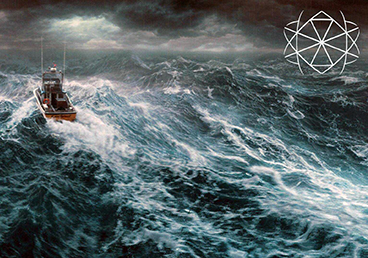
Thus, the Love of the Source manifests not only in tenderness and light, but equally in destruction and shadow — for both are movements of the same divine breath. The fire that destroys is the same that warms; the ocean that drowns is the same that sustains.
When fragmented consciousness judges something as “evil,” it does so from the perspective of separation — for only one who feels apart from the whole can condemn one of its parts.
Judgement, therefore, is a reflection of forgetfulness: the mind judges the world because it has forgotten that it is the world. When Consciousness awakens, there is nothing left to condemn — only to understand. And to understand is to liberate.
Good and Evil, as concepts, are pedagogical instruments of the dream. They serve the experience of duality, of choice and experience — but possess no ultimate reality. Consciousness allows them to exist so that the soul may experience contrast, learn discernment, and finally transcend both. Thus, “evil” is not the opposite of “good,” but the mirror through which good recognises itself — until both dissolve in the recognition of Unity.
Within the dual field, the dance between constructive and destructive is the very movement of Life. Were the Source to remove the “negative,” the creative impulse itself would cease, for every creative force requires tension, contrast, and imbalance. It is through the friction between poles that energy manifests; through the alternation between expansion and contraction that the cosmos breathes. Evil, therefore, is not an error — it is one of the poles that allows Love to manifest in fullness.
When the seeker awakens to the recognition that he is the very Consciousness that witnesses, something profoundly silent occurs: the game of duality loses its power to bind.
Anger, pain, and pleasure continue to arise, but they are perceived as waves upon the surface of an essentially motionless ocean. In this stillness, “evil” and “good” cease to be categories and become simply movements — vibrations of the same Source that, in its serenity, embraces all.Finally, to comprehend the neutrality of Consciousness is to surrender to the Silence that precedes all creation. It is to recognise that the Universe was not created by a “moral god,” but by Plenitude itself — which, being All, excludes nothing. At the highest degree of perception, even the search for “light” dissolves — for one discovers that light and shadow are but expressions of the same divine neutrality: the still point from which all things arise, vibrate, and return.
In the Eternity of that which never was born,
With Sincere Vows of Awakening,
Conscendo Sodalitas